TOP termékek

Webáruházunk külföldi beszállító partnereink raktáraiban lévő készleteket jelenít meg.

Elérhetőségeink: +36 70 724 3768 | info@boardgamezone.hu

Összes

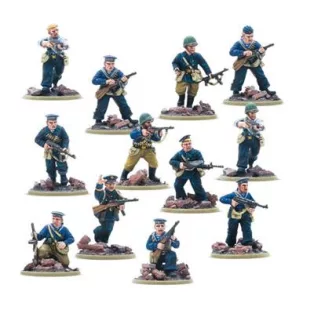
With the Soviet navy largely bottled up in harbour, many sailors were pressed into service as frontline infantrymen, often still dressed in their black naval uniform with its distinctive cap and striped telnyashka undershirt.
A number of specialised naval infantry units were formed: forty brigades and five regiments. They won a reputation for tenacity and daring both in defensive fightin

...
Kiadás nyelve:
nyelvfüggetlen
Kiadás nyelve ikon:
nyelvfüggetlen
Nincs raktáron
RRP: 15 690 Ft 
Nálunk: 13 990 Ft
Nincs raktáron
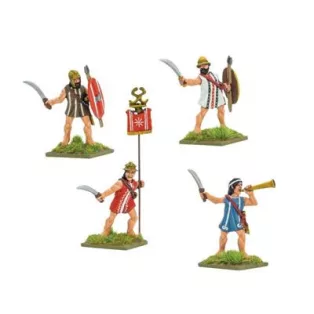
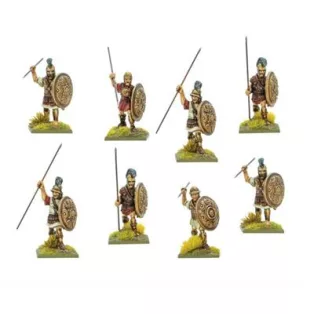
The Illyrians were a collection of tribal peoples inhabiting what is now the western Balkans and both sides of the Adriatic coast. Long exposure to Greek culture meant the armies of the Illyrian Kingdoms closest to Greece and Macedonia were not the usual untrained tribal forces, but constituted warriors with experience of fighting as mercenaries in the armies of the Greek world. The thureos

...
Kiadás nyelve:
nyelvfüggetlen
Kiadás nyelve ikon:
nyelvfüggetlen
Nincs raktáron
RRP: 5 990 Ft 
Nálunk: 5 290 Ft
Nincs raktáron

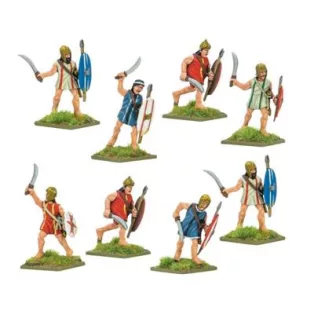
The Illyrians were a collection of tribal peoples inhabiting what is now the western Balkans and both sides of the Adriatic coast. Long exposure to Greek culture meant the armies of the Illyrian Kingdoms closest to Greece and Macedonia were not the usual untrained tribal forces, but constituted warriors with experience of fighting as mercenaries in the armies of the Greek world. The thureos

...
Kiadás nyelve:
nyelvfüggetlen
Kiadás nyelve ikon:
nyelvfüggetlen
Nincs raktáron
RRP: 8 790 Ft 
Nálunk: 7 790 Ft
Nincs raktáron

Illyrian Nobles were well-armed and armoured warriors, often featuring the full panoply of bronze breastplates, greaves, and helmets. Illyrian armies fielded few cavalry and were masters of raids, ambuscades, and skirmishing. They used spears, javelins, and the Illyrian sica, a distinctive curved sword. Nobles displayed wealth with more body armour and sometimes imported or looted Greek wea

...
Kiadás nyelve:
nyelvfüggetlen
Kiadás nyelve ikon:
nyelvfüggetlen
Nincs raktáron
RRP: 8 790 Ft 
Nálunk: 7 790 Ft
Nincs raktáron

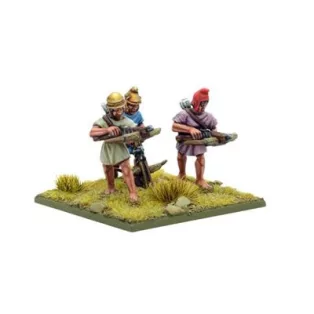
The gastraphetes ('belly-shooter') was developed by Greek engineers in the 5th century BC. This powerful combined the strength of a composite bow with a mechanical draw system, allowing soldiers to fire bolts capable of piercing armoured targets. The weapon was operated by bracing the stock against the belly and using bodyweight to draw the string. It was a forerunner of later siege engines

...
Kiadás nyelve:
nyelvfüggetlen
Kiadás nyelve ikon:
nyelvfüggetlen
Nincs raktáron
RRP: 8 790 Ft 
Nálunk: 7 790 Ft
Nincs raktáron

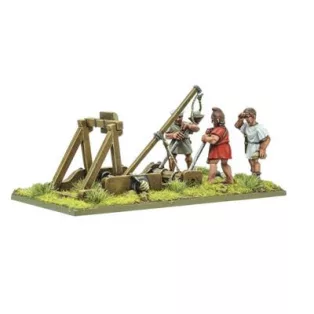
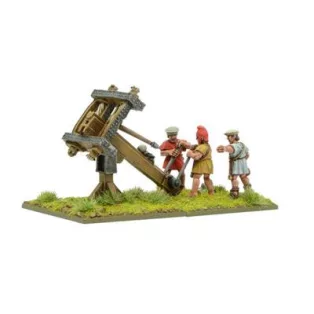
Under Philip II and his son Alexander the Great, siege trains began to feature more prominently in Hellenistic warfare. This trend continued among Alexander's successors, with their most famous proponent being Demetrius the Besieger and his famed, though unsuccessful Siege of Rhodes in 305-304 BC. Able to fling a missile great distance, the Onager was used for besieging forts or settlements

...
Kiadás nyelve:
nyelvfüggetlen
Kiadás nyelve ikon:
nyelvfüggetlen
Nincs raktáron
RRP: 13 090 Ft 
Nálunk: 11 590 Ft
Nincs raktáron

Under Philip II and his son Alexander the Great, siege trains began to feature more prominently in Hellenistic warfare. This trend continued among Alexander's successors, with their most famous proponent being Demetrius the Besieger and his famed, though unsuccessful Siege of Rhodes in 305-304 BC. Loaded with bolts or stone 'shot' the ballista was a highly accurate weapon (there are many ac

...
Kiadás nyelve:
nyelvfüggetlen
Kiadás nyelve ikon:
nyelvfüggetlen
Nincs raktáron
RRP: 13 090 Ft 
Nálunk: 11 590 Ft
Nincs raktáron

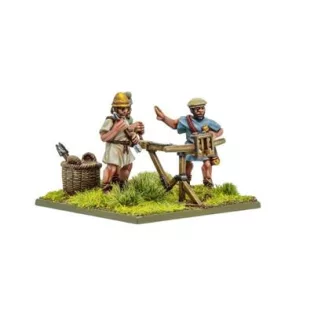
The light artillery bolt thrower, or to give it its Greek name; the oxybeles ('sharp arrow') was developed from the gastrophetes belly bow, made larger, and placed on a stand with a stock and a trigger. Their use came to prominence under Alexander the Great, and they continued in service in the armies of his Successors.
Miniature sculpted by Toma Axelsson. Studio Miniatures painted by An

...
Kiadás nyelve:
nyelvfüggetlen
Kiadás nyelve ikon:
nyelvfüggetlen
Nincs raktáron
RRP: 8 790 Ft 
Nálunk: 7 790 Ft
Nincs raktáron

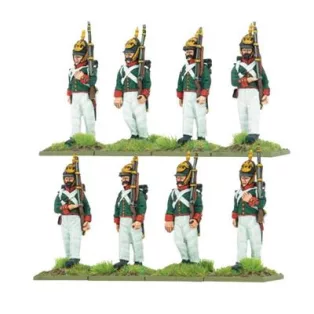
In the mid 19th century, Russia fielded the largest army in Europe, drawing from a vast pool of peasant and serf conscripts. Renowned for their immense numbers, bravery, and fervent loyalty to the Tsar, the Russian conscript had poor training, outdated equipment, and weak leadership, relying heavily on bayonet charges due to poor marksmanship. Although often clad in drab greatcoats, in the

...
Kiadás nyelve:
nyelvfüggetlen
Kiadás nyelve ikon:
nyelvfüggetlen
Nincs raktáron
RRP: 5 490 Ft 
Nálunk: 4 890 Ft
Nincs raktáron

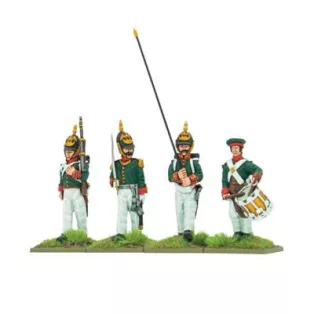
In the mid 19th century, Russia fielded the largest army in Europe, drawing from a vast pool of peasant and serf conscripts. Renowned for their immense numbers, bravery, and fervent loyalty to the Tsar, the Russian conscript had poor training, outdated equipment, and weak leadership, relying heavily on bayonet charges due to poor marksmanship. Although often clad in drab greatcoats, in the

...
Kiadás nyelve:
nyelvfüggetlen
Kiadás nyelve ikon:
nyelvfüggetlen
Nincs raktáron
RRP: 8 790 Ft 
Nálunk: 7 790 Ft
Nincs raktáron

The Crimean War was a period of radical transformation for the Ottoman officer corps. It was an organisation consisting of a mix of politically appointed, often illiterate officers, contrasted against a growing cadre of Western-educated graduates from European military academies. This resulted in a diverse and sometimes confused command structure considered backward and corrupt by the Ottom

...
Kiadás nyelve:
nyelvfüggetlen
Kiadás nyelve ikon:
nyelvfüggetlen
Nincs raktáron
RRP: 6 590 Ft 
Nálunk: 5 790 Ft
Nincs raktáron

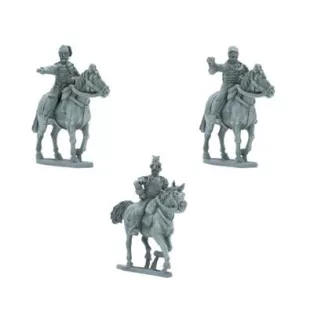
Once the scourge of Europe in earlier eras, by the time of the Crimean War, the cavalry arm was considered the worst element of the Ottoman army. These colourful and distinctive troops in their bright red fez headwear were mainly used in strategic support roles in secondary theatres like the Caucusus Front. While not always in decisive heavy cavalry charges like their European counterparts,

...
Kiadás nyelve:
nyelvfüggetlen
Kiadás nyelve ikon:
nyelvfüggetlen
Nincs raktáron
RRP: 5 090 Ft 
Nálunk: 4 590 Ft
Nincs raktáron

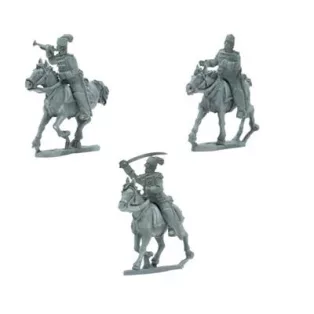
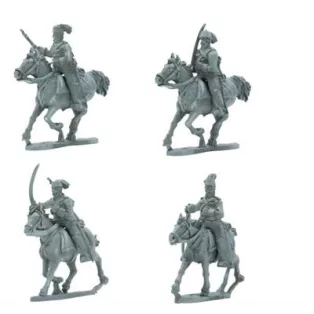
Once the scourge of Europe in earlier eras, by the time of the Crimean War, the cavalry arm was considered the worst element of the Ottoman army. These colourful and distinctive troops in their bright red fez headwear were mainly used in strategic support roles in secondary theatres like the Caucusus Front. While not always in decisive heavy cavalry charges like their European counterparts,

...
Kiadás nyelve:
nyelvfüggetlen
Kiadás nyelve ikon:
nyelvfüggetlen
Nincs raktáron
RRP: 5 090 Ft 
Nálunk: 4 590 Ft
Nincs raktáron

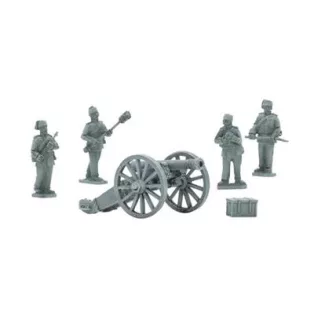
During the Crimean War, Ottoman artillery used a mix of older smoothbore cannons and some newer rifled guns. Their overall effectiveness was hampered by technological disadvantages, logistical problems, and the mixed quality of the Ottoman artillery corps.
Miniature sculpted by Michael Percy. 
Models supplied unassembled and unpainted.


Kiadás nyelve:
nyelvfüggetlen
Kiadás nyelve ikon:
nyelvfüggetlen
Nincs raktáron
RRP: 8 790 Ft 
Nálunk: 7 790 Ft
Nincs raktáron

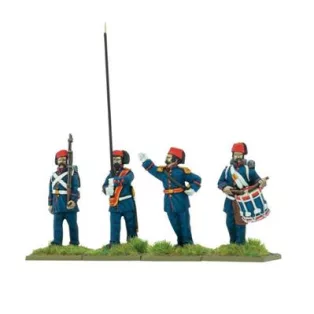
The Ottoman army was undergoing a period of modernisation when the Crimean War broke out. Although showing mixed effectiveness, and often disparaged by their British and French allies, the Ottoman suffered from the same supply issues, harsh conditions and logistical failures as the other armies in the conflict.
Contains 4 metal 28mm infantry miniatures.
Miniature sculpted by Michael P

...
Kiadás nyelve:
nyelvfüggetlen
Kiadás nyelve ikon:
nyelvfüggetlen
Nincs raktáron
RRP: 5 490 Ft 
Nálunk: 4 890 Ft
Nincs raktáron